Blog

  • Hello world!

    Welcome to WordPress. This is your first post. Edit or delete it, then start writing!

  • Contact

    Contact Us

    Got a question?
    A random thought you can’t get out of your head?
    Or just tired of overthinking alone?

    Yeah… we get it.


    Slide into our inbox

    📧 whythoreads@gmail.com


    Real talk

    Whether it’s:

    • a topic you want explained
    • feedback (good or brutal, we can take it)
    • or just a “this made me think” message

    We’re listening.


    Response time

    We try to reply as soon as possible…
    unless we’re busy questioning life ourselves.


    Either way, your message won’t be ignored.

    So go ahead.
    and Ask your “Why”

  • About Whytho

    Stop Scrolling. Start Understanding.

    Let’s call it out.

    You opened your phone to “just check one thing”…
    and somehow ended up 40 minutes deep into reels you don’t even remember.

    Yeah. Same.

    That’s exactly where WhyTho begins.


    So… what is WhyTho?

    Think of WhyTho as that one friend who doesn’t just nod along —
    but stops and asks:

    “Wait… but why?”

    Why is AI suddenly everywhere?
    Why do we overthink at night?
    Why does everyone feel busy but not productive?

    While the internet throws information at you,
    WhyTho tries to make sense of it.


    Why this even exists

    Because honestly?

    We’re drowning in content…
    but starving for understanding.

    You’ll find:

    • quick hacks
    • half-knowledge
    • recycled facts

    But very few places that actually explain things in a way that clicks.

    So instead of adding more noise,
    WhyTho focuses on clarity.


    What you’ll find here

    No boring lectures. No unnecessary jargon.

    Just:

    • Psychology decoded in real life
    • AI & tech explained without confusion
    • Money & career truths people don’t say out loud
    • Random “why” questions that suddenly make sense

    Every article is built to make you go:

    “Ohhh… THAT’S why.”


    Who is this for?

    Not for everyone.

    This is for people who:

    • Can’t just accept things blindly
    • Overthink (a little or a lot 👀)
    • Feel like there’s always “something deeper” going on
    • Are tired of scrolling without learning anything

    If you’ve ever paused and thought:

    “There has to be a reason behind this…”

    Welcome. You’ll fit right in.


    What makes WhyTho different?

    We don’t try to sound smart.

    We try to make things make sense.

    No fluff.
    No over-complication.
    No pretending.

    Just clear, honest explanations —
    the kind you wish someone had told you earlier.


    Want to reach out?

    Got a question?
    A topic stuck in your head?
    Or just want to say this actually made you think?

    Email: whythoreads@gmail.com


    💬 One last thing

    Next time you’re scrolling…

    Pause.

    And ask yourself:

    “Why?”

    Because once you start asking better questions,
    you start seeing the world differently.

    And that’s exactly what WhyTho is here for.

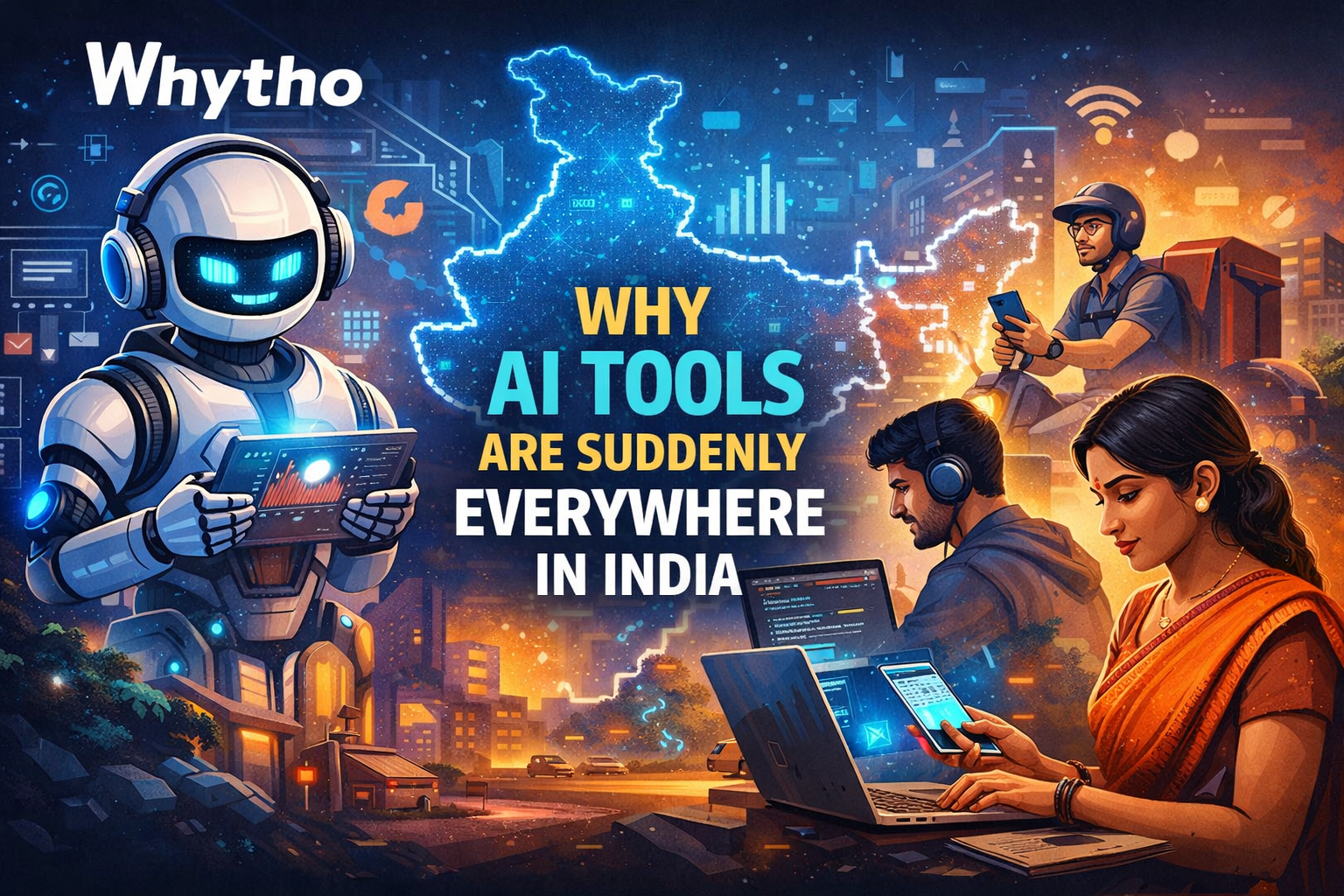
  • Why AI Tools Are Suddenly Everywhere in India — Aur Yeh Itna Fast Kyun Ho Raha Hai?

    Kal tak AI ek buzzword tha.
    Aaj AI tumhare phone, office, aur WhatsApp tak aa gaya hai.
    Content likhna ho, resume banana ho, ya coding — sab AI kar raha hai.
    Par sawal yeh hai… India mein AI itni speed se suddenly popular kaise ho gaya?
    Chalo simple answer se shuru karte hain.
    AI suddenly popular nahi hua — India finally ready ho gaya.


    Pichle kuch saalon mein India ne quietly groundwork build kiya hai.
    Cheap internet, smartphones ka explosion, aur digital literacy — yeh sab ek ecosystem create kar rahe the. AI bas us ecosystem ka next logical step hai.
    Phir aaya turning point.


    Jab tools like ChatGPT, image generators, aur AI apps common logon ke liye accessible ho gaye, tab AI “tech logon ka concept” se nikal ke everyday life ka tool ban gaya.
    Ab ek student AI se notes banata hai.
    Ek creator AI se scripts likhta hai.
    Ek startup AI se cost reduce karta hai.
    Aur ek office employee AI se apna kaam fast karta hai.
    Yahan ek aur important factor hai — India ka jugaad mindset.

    India sirf technology use nahi karta, usko adapt karta hai.
    Log AI ko sirf experiment nahi kar rahe, balki usko apne kaam ka shortcut bana rahe hain.
    Aur phir aata hai pressure.
    Work faster. Produce more. Stay relevant.
    AI suddenly optional nahi raha — competitive necessity ban gaya.

    Isliye har sector mein AI entry le chuka hai:

    Education
    Marketing
    Business
    Freelancing
    Even personal life
    Par ek interesting twist bhi hai.

    Jitna AI grow ho raha hai, utna hi ek silent fear bhi grow ho raha hai

    Whytho Sawal yeh hai ki –

    “Will AI replace us?”
    Reality thodi different hai.
    AI replace nahi karta.
    AI redefine karta hai.
    Jo adapt karega, woh grow karega.
    Jo ignore karega, woh struggle karega.
    Aur shayad yahi reason hai ki India mein AI ka boom itna visible hai.

    Yeh sirf technology ka rise nahi hai —

    yeh ek mindset shift hai.
    Ab log tools nahi dhoond rahe,
    log shortcuts dhoond rahe hain.
    Aur AI unhe woh de raha hai.

    Whytho Insight kehta hai-
    Shayad AI ka asli impact yeh nahi hai ki machines smart ho rahi hain.
    Asli impact yeh hai ki hum apna kaam karne ka tareeka change kar rahe hain.
    Aur jab kaam ka tareeka change hota hai…
    tab sirf jobs nahi,
    poora system change ho jata hai.

  • Why Iceland Has No Mosquitoes — Aur Nature Yahan Itni Selective Kyun Hai?

    Kabhi socha hai ek aisi jagah ke baare mein…
    jahan glaciers hain, volcanoes hain, lakes hain…
    par ek bhi mosquito nahi?

    Haan, ek bhi nahi.

    Aur jab duniya ki aadhi population mosquito se pareshaan hai,
    Iceland shayad quietly keh raha hai:
    “Yahan entry allowed nahi.”

    Short answer pehle sun lo.

    Iceland mein mosquitoes nahi hote because climate unke life cycle ko complete hone hi nahi deta.

    Ab thoda detail mein chalte hain.

    Mosquito ka life cycle simple hota hai:
    Egg → Larva → Pupa → Adult.

    Par is cycle ko complete karne ke liye stable temperature aur standing water chahiye. Iceland ka weather? Bilkul opposite.

    Yahan temperature bahut unpredictable hai. Ek din thaw, next day freeze. Yeh constant freezing-thawing mosquito larvae ke development ko disrupt kar deta hai. Matlab eggs survive kar sakte hain, par adulthood tak pahunchna almost impossible ho jata hai.

    Aur sirf temperature hi reason nahi hai.

    Iceland ka soil aur water system bhi unusual hai. Country volcanic hai, aur lakes aur wetlands ka ecosystem continuously shift karta rehta hai. Mosquito larvae ko jo stagnant water environment chahiye hota hai, woh yahan stable form mein milta hi nahi.

    Whytho moment yahin hai.

    Nature kabhi kabhi ecosystem ko itna unique bana deta hai ki kuch species simply fit nahi hoti.

    Ab Whytho Trivia samjho:
    Iceland mein midges naam ke tiny insects milte hain jo mosquitoes jaise lagte hain, par bite nahi karte. Isliye tourists pehle confuse ho jaate hain. Local log bas muskura ke bolte hain — “Relax, yeh mosquito nahi hai.”

    Ab interesting contrast dekho.

    Greenland, Norway, aur Scotland mein mosquitoes milte hain.
    Par Iceland mein nahi.

    Same region, different outcome.

    Nature ka reminder: geography matters.

    Aur shayad isi liye Iceland sirf glaciers aur northern lights ke liye famous nahi hai.
    Woh ek aur cheez ka symbol hai — balance.

    Jahan ecosystem itna specific ho ki har species ko jagah nahi milti.

    Aur jab tum Iceland ki hawa mein khade hote ho, bina mosquito ke buzz ke,
    toh realise hota hai —

    Kabhi kabhi paradise ka matlab luxury nahi hota.

    Kabhi kabhi paradise ka matlab bas itna hota hai:
    raat ko bina mosquito coil ke sona.

  • If Harm Isn’t Clearly Illegal, What Does Protection Mean?

    Kuch headlines loud nahi hoti.
    Woh bas heavy hoti hain.
    Aur kabhi-kabhi… woh quietly system ko redefine kar deti hain.

    Afghanistan mein Taliban ke rule ke baad jo legal changes aaye hain, unmein domestic matters ko lekar kaafi global discussion ho raha hai. Reports ke mutabik, kuch judicial interpretations mein “discipline” aur “violence” ke beech ka line clearly define nahi kiya gaya — jab tak severe physical injury prove na ho.

    Yahan context samajhna zaroori hai.

    2021 mein power mein wapas aane ke baad Taliban ne Afghanistan ka legal structure apni interpretation of Sharia law ke according reshape kiya. Education access, employment restrictions, travel rules — especially for women — gradually change hue. Domestic disputes ab largely religious courts ke under handle hote hain, aur family matters ko private domain maana jaata hai.

    Human rights groups ka concern yeh hai ki agar law explicitly physical abuse ko criminalize nahi karta — ya threshold unclear hai — toh accountability weaken ho sakti hai. International organizations ne is ambiguity par concern express kiya hai.

    History bhi relevant hai.
    2009 mein previous Afghan government ne EVAW (Elimination of Violence Against Women) Law introduce kiya tha, jisme domestic abuse ko explicitly criminal offense maana gaya tha. Implementation tab bhi uneven tha, lekin framework exist karta tha. Current administration ne us structure ko maintain nahi kiya.

    Taliban officials ka stance yeh hai ki unka judicial system religious principles aur cultural norms follow karta hai. Critics argue karte hain ki vague definitions vulnerable groups ke liye protection reduce kar sakti hain.

    Whytho moment yahin aata hai.

    Jab law ki language change hoti hai, toh sirf rulebook nahi badalta —
    power ka balance bhi shift hota hai.

    Yeh debate sirf Afghanistan ke baare mein nahi hai.
    Yeh ek broader sawaal uthata hai:

    Violence ko define kaun karta hai?
    Aur safety ki line draw kaun karta hai?

    Legal systems static nahi hote.
    Woh governance, culture, aur authority ka reflection hote hain.

    Par ek cheez universal hai —
    jab protection unclear ho jaaye,
    tab conversation aur scrutiny aur bhi zaroori ho jaati hai.

    Kyuki har society mein,
    authority aur safety ke beech ka line
    carefully draw hona chahiye.

    Aur jab woh line blur ho,
    tab silence kabhi neutral nahi hota.

    Relationship satisfaction doesn’t exist in a vacuum.

    Legal protections, gender equality, and personal rights often shape how safe love feels. Click the link to know where India stand on the index https://whytho.in/2026/02/21/indias-love-life-ranking-is-out-but-are-we-really-that-happy-or-just-adjusting/

    Read more: If Harm Isn’t Clearly Illegal, What Does Protection Mean?

  • India’s Love Life Ranking Is Out. But Are We Really That Happy… Or Just Adjusting?

    Tum khush ho?”
    “Ha… matlab haan.”
    “Pakka?”
    “Dekho, complicated hai.”

    Aur bas. Yahi se shuru hoti hai India ki love story.

    Recently released Love Life Satisfaction Index mein India ka ranking decent mid-zone mein aata hai — na top romantic paradise, na heartbreak capital. But here’s the twist: ranking numbers emotions ka full picture nahi batate.

    Countries like Finland, Denmark, and Sweden consistently top relationship satisfaction surveys. Kyun? High work-life balance, gender equality, emotional independence culture.
    Japan aur South Korea lower side pe aate hain — long work hours, social pressure, low dating frequency impact karte hain.

    India?
    Hum log statistically “moderately satisfied” category mein land karte hain.

    Whytho savage truth?
    Hum satisfaction ko love se confuse kar dete hain.

    India mein relationships often partnership + family expectation + stability ka combo hote hain. Romance important hai, par responsibility bigger factor hota hai. Emotional expression kabhi kabhi Bollywood tak limited reh jata hai.

    Dialogue time.

    “Tu mujhe time kyun nahi deta?”
    “Office hai yaar.”
    “Par pyaar?”
    “Woh toh hai na.”

    See the pattern?

    High collectivist cultures mein relationship satisfaction ka measure alag hota hai. Western countries individuality se measure karte hain. India loyalty, adjustment aur family approval se.

    Strong trivia:
    Global surveys show that countries with higher gender equality indexes often report higher relationship satisfaction levels. Correlation coincidence nahi hota.

    Toh kya India unhappy hai?
    Nahi.

    Kya India fully expressive, emotionally open, therapy-normalized love culture hai?
    Also no.

    Hum beech mein hain.
    Jahan “chalta hai” aur “chal jayega” relationship philosophy ban jata hai.

    Real question ranking ka nahi hai.

    Real question yeh hai —
    Kya hum emotionally fulfilled hain, ya socially stable?

    Because satisfaction aur silence ek jaise lag sakte hain.

    Aur shayad India ka love index ek number nahi…
    Ek dialogue hai jo abhi complete hona baaki hai.

  • These 5 Islands Have Banned Humans Without Saying It Out Loud

    Imagine reaching a place…
    Aur wahan koi human authority hi nahi.
    Koi mayor nahi. Koi politician nahi.
    Sirf animals. Aur unka full control.

    Plot twist?
    Humans yahan permanent residents nahi — tourist species hain.

    Welcome to Earth’s real power shift.

    Imagine booking a trip…
    Aur wahan jaake realise ho ki tum VIP nahi ho.
    Tum background ho.
    Aur asli main character ek rabbit hai.
    Welcome to places jahan humans “visitors” hain — aur animals full-time government.


    1. Okunoshima, Japan — The Rabbit Takeover
    WWII ke dauran yeh island poison gas factory tha.
    Humans ne destruction chhoda.
    Rabbits ne comeback kiya.
    Aaj 1000+ rabbits freely roam karte hain.
    Tourists snacks leke jaate hain.
    Power dynamics clear hain:
    You feed. They judge.

    2. Aoshima, Japan — Cat Majority, Human Minority
    Fishermen ne rats control karne ke liye cats introduce ki.
    Classic human move.
    Problem solve hua… phir cats multiplied.
    Ab population equation simple hai:
    Cats >>> Humans.
    Island democracy? Feline edition.

    3. Big Major Cay, Bahamas — Pigs With Beach Rights
    Crystal clear water. Instagram vibes.
    Aur beach pe casually swimming pigs.
    Origin unclear. Legend strong.
    Sailors ne chhoda? Shipwreck survivors?
    Doesn’t matter.
    Pigs are now brand ambassadors.
    Hum log selfies lete hain.
    Woh food calculate karte hain.

    4. Nara Park, Japan — Bowing Deer Diplomacy
    Yahan deer sacred hain.
    Crackers dikhao, woh bow karte hain.
    Yes. Wildlife politely negotiates.
    Try getting that level of manners from humans.

    5. Ilha da Queimada Grande, Brazil — Snake Island
    Golden lancehead vipers itne zyada hain ki humans officially restricted hain.
    Estimated density once: 1 snake per square meter.
    Translation?
    Yeh island ne clearly bola:
    “Human access denied.”

    Whytho savage truth?
    Hum sochte hain planet humara hai.
    Par jahan hum interfere nahi karte,
    nature collapse nahi hota — dominate karta hai.

    Kabhi kabhi Earth ko bas itna kehna hota hai:
    “Thank you for visiting. Exit left.”

    Aur shayad isi liye,
    Yeh islands tourist spots nahi —
    ego correction centers hain.

  • India’s Passport Is Climbing the Global Index. But What Does “Visa-Free” Actually Mean?

    Suddenly everyone is posting passport screenshots.
    “India climbed the ranking!”
    “Visa-free access increased!”
    Aur travel reels full patriotic ho gaye.

    Par ruk jao.
    Visa-free ka matlab sirf airport selfie nahi hota.

    Let’s break it down.

    India ka passport global rankings mein improve kar raha hai — especially according to the Henley Passport Index. Yeh index har saal passports ko rank karta hai based on how many destinations their holders can enter without a prior visa.

    Short answer:
    The stronger the passport, the more countries you can visit without applying for a visa in advance.

    So what is the Henley Passport Index?

    Henley Passport Index ek global ranking system hai jo International Air Transport Association (IATA) ke data pe based hota hai. Yeh count karta hai kitne destinations pe aap:

    • Visa-free travel kar sakte ho
    • Visa-on-arrival le sakte ho
    • Ya Electronic Travel Authorization (eTA) use kar sakte ho

    Strong trivia:
    Japan aur Singapore regularly top rankings pe rehte hain, with access to 190+ destinations. India historically mid-tier range mein raha hai, but recent years mein gradual improvement dekha gaya hai.

    Toh India ke liye kya change hua?

    India passport holders ko ab multiple countries visa-free ya visa-on-arrival access dete hain — especially in:

    • Southeast Asia (Thailand, Indonesia, Maldives)
    • Africa ke kuch nations
    • Caribbean islands
    • Pacific regions

    Important nuance:
    Visa-free ka matlab yeh nahi ki “no rules.”
    It means you don’t need prior embassy approval. Entry pe duration limits, return tickets, funds proof sab check hota hai.

    Whytho truth?
    Passport strength sirf travel freedom ka symbol nahi hota — yeh diplomacy ka signal hota hai.

    Countries jab visa relax karte hain, woh economic trust, tourism value, aur bilateral relations ka reflection hota hai. A stronger passport means better international standing.

    Par yeh bhi yaad rakho:
    Ranking improve hona pride moment ho sakta hai, par global mobility abhi bhi uneven hai. Europe, US, Canada jaise regions ke liye Indians ko still prior visa process follow karna padta hai.

    So celebrate? Haan.
    Overestimate? Nahi.

    Passport index climb ek headline hai.
    Real power tab aata hai jab economic strength aur global agreements bhi climb karein.

    Kyuki ultimately, passport sirf booklet nahi hota.
    Woh ek country ki negotiation power ka snapshot hota hai.

    Aur ab jab India climb kar raha hai, sawaal yeh hai —
    yeh momentum sustain hoga?

    Travel reels alag cheez hain.
    Geopolitics alag game hai.

  • Dirty Highway Toilet? Complain Karo… Aur ₹1000 FASTag Reward Le Jao?

    Road trip ka mood set.
    Playlist perfect.
    Highway smooth.
    Aur phir… washroom reality check.

    India mein travellers ka biggest unspoken fear: highway toilets.

    Ab ek interesting twist aaya hai. Reports ke according, agar aap NHAI highway rest stop pe dirty toilet report karte ho, toh you may be eligible for a ₹1000 FASTag-related incentive / reward mechanism.

    Sounds shocking? Thoda.
    Too good to be true? Maybe.

    Let’s decode.

    National Highways Authority of India (NHAI) ka focus recent years mein sirf roads tak limited nahi raha. User experience — including WaySide Amenities (WSAs) like clean toilets, fuel, food — ab priority list pe aa gaya hai.

    Idea simple hai:
    Travellers ko empower karo to report hygiene issues via:

    • Official apps
    • Helplines
    • Feedback systems

    Aur operators ko accountable rakho.

    Whytho truth?
    Yeh reward “toilet ke liye paisa” nahi hai.
    Yeh compliance + monitoring incentive model ka part hai.

    ₹1000 ka incentive mostly awareness & behavioural push ke liye circulate ho raha hai — taaki log complaint karein instead of silently suffer karne ke. FASTag integration ka reason? Digital traceability + verified highway usage.

    But nuance samajhna zaroori hai.

    Har complaint pe automatic ₹1000 nahi milta.
    Conditions apply kar sakti hain:
    ✔ Valid complaint
    ✔ Verified location
    ✔ System acknowledgement
    ✔ Pilot / scheme-specific rollout

    Savage reality?
    India mein complaint culture weak hai.
    Hum rant karte hain, report nahi.

    Agar yeh mechanism properly implement hua, toh clean toilets luxury nahi, baseline ban sakte hain. Operators ko bhi signal clear — hygiene optional nahi.

    Because jab traveller bolne lagta hai,
    system ko sunna padta hai.

    Aur honestly,
    agar ek complaint se washroom dignity improve hoti hai…
    toh reward sirf ₹1000 nahi hai.